 Part of Dumpit Scotland Group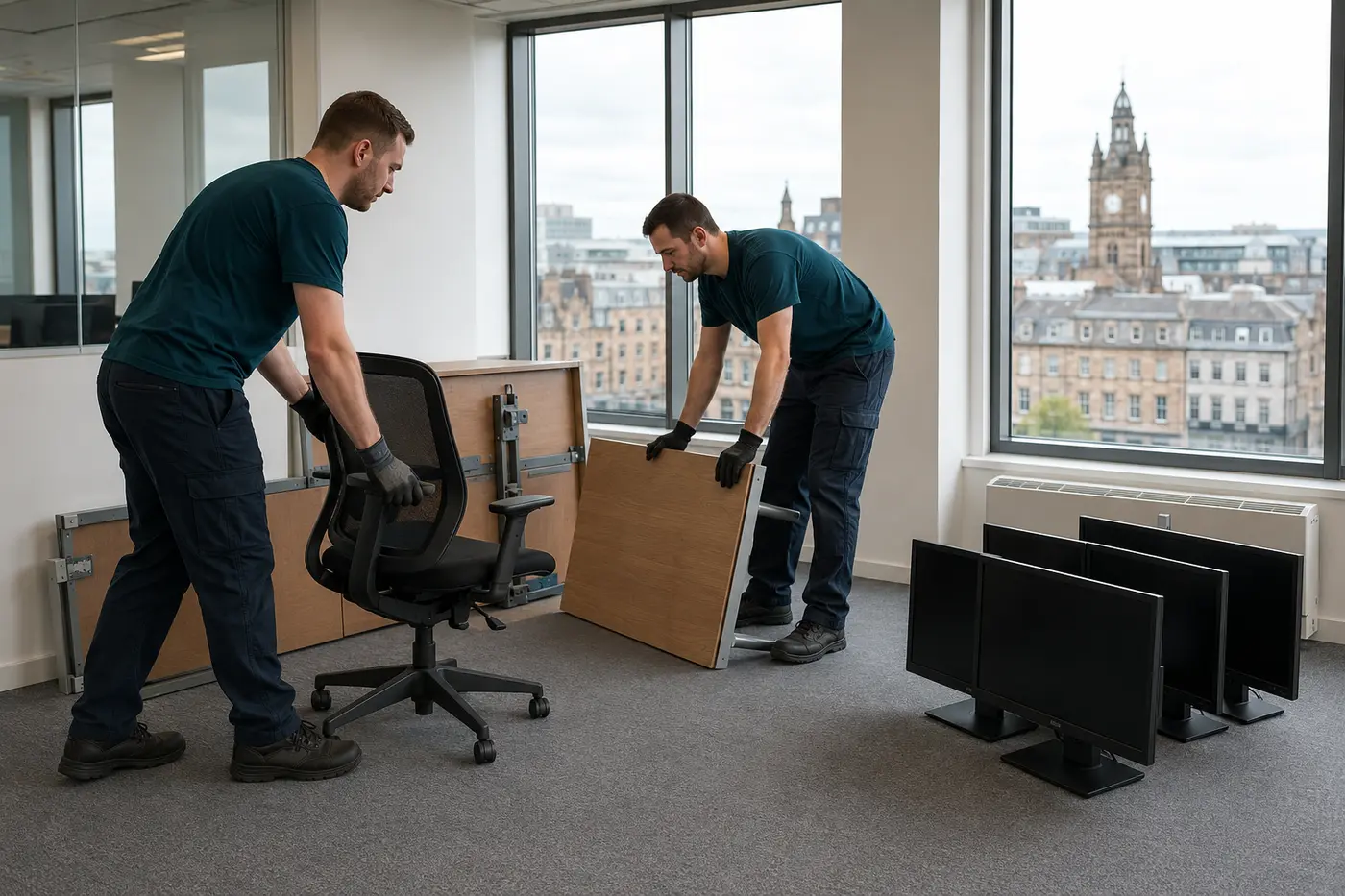
Approve furniture and equipment separately
List desks, chairs, cabinets and other contents for disposal, then mark retained items. Include store cupboards and staff areas in the inventory. Check ownership of leased equipment before approving its removal. A named contact should resolve questions so the team does not receive competing instructions from different departments during the clearance.
Complete the data-handling decisions
Inspect paperwork and data-bearing devices through the business’s own process before collection. Secure destruction is a separate requirement from removing a cabinet or computer. Ask for an explicit service and suitable evidence if needed. Keep items awaiting checks away from the clearance zone so they cannot leave before the business has authorised disposal.
Book building access and handover
Provide loading-bay details, lift dimensions, contractor rules and any approved working window. If staff remain, agree phases and routes with the responsible manager. Contents clearance does not include removing fixed interiors unless separately assessed. At completion, inspect the approved areas and retain the relevant records with the accepted quotation and inventory.
Related service and practical next steps
Office Clearance · Waste removal prices · Discuss your collection